Home › Travel guides › Best time to visit Morocco
Best time to visit Morocco: seasons, weather and where to go
The short answer: spring (March to May) and autumn (late September to November) are the most comfortable seasons for most trips to Morocco. Then choose by destination, because Marrakech, the Atlas, the Sahara and Essaouira do not share the same best months. The figures below are official 1991–2020 climate averages; real weather changes from year to year, so check the forecast before you leave.
- Best overallMarch–May and late September–November
- Hottest inlandJuly and August
- Cool in summerEssaouira, on the Atlantic
- Weather dataWMO climate normals 1991–2020
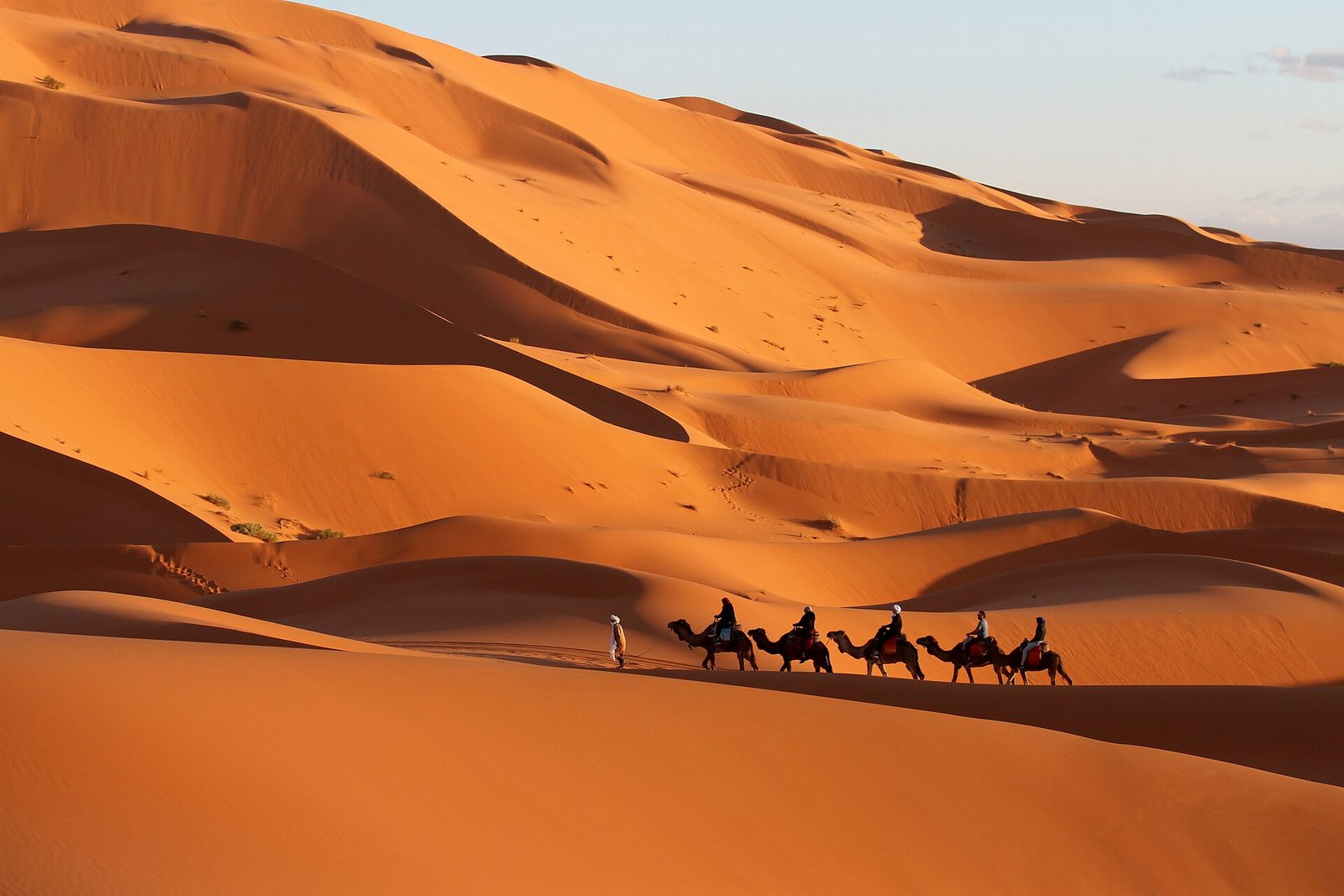
Morocco by season and destination
Average daily highs and lows (°C) from the official station named in each block. Marrakech figures are for the city only; the Atlas is covered separately below.
| Season | Pros | Limits |
|---|---|---|
| Marrakech (city) · station: Marrakech, WMO 60230 | ||
| Spring (Mar–May) | Highs about 24–29 °C, lows 10–15 °C: comfortable for walking the medina | March is the wettest month of the year (about 35 mm) |
| Summer (Jun–Aug) | Long days; mornings and evenings are the best time to explore | Highs about 34–38 °C in July–August |
| Autumn (Sep–Nov) | Highs about 23–33 °C, warm days and milder evenings | Rain returns in November (about 30 mm) |
| Winter (Dec–Feb) | Mild, often sunny days: highs about 19–21 °C | Cold nights: lows about 6–8 °C |
| Sahara, Merzouga area · regional benchmark: Errachidia station, WMO 60210 (north of the dunes) | ||
| Spring (Mar–May) | Highs about 22–30 °C; a good balance for the desert route | Nights still cool in March (lows about 9 °C) |
| Summer (Jun–Aug) | Possible with an adapted schedule | Highs about 35–40 °C; lows 22–26 °C |
| Autumn (Sep–Nov) | Highs about 21–33 °C; pleasant from October | November nights get cold (lows about 8 °C) |
| Winter (Dec–Feb) | Daytime highs about 16–18 °C | Near-freezing nights: lows about 2–5 °C |
| Essaouira · station: Essaouira, WMO 60220 | ||
| Spring (Mar–May) | Mild: highs about 19–21 °C | Windy: 17–18 days a month with strong wind |
| Summer (Jun–Aug) | Cool break from inland heat: highs about 21–22 °C | Windiest season: up to 21–22 windy days in July |
| Autumn (Sep–Nov) | Highs about 20–23 °C, fewer windy days | Rain returns in November (about 55 mm) |
| Winter (Dec–Feb) | Mild days: highs about 18–19 °C | Wettest months (about 48–56 mm in Dec–Jan) |
“Strong wind” = days with wind of at least 10 m/s in the WMO normals. Sources: see the end of this guide.
The Atlas: a separate case
The temperatures in the table are for Marrakech and vary in the mountains with altitude and location. Two things to know:
- Tizi n’Tichka pass (2,260 m). The road between Marrakech and Ouarzazate, used by our desert tours, crosses this pass. After heavy snow it can close for a while: in December 2025, traffic was stopped at the pass after strong snowfall until the road was cleared. In winter, check the road status before you leave and keep a flexible day; our team confirms the route with you.
- Midelt, in the Middle Atlas (1,508 m). The 4-day tour to Fes passes through Midelt. The official averages there are a high of about 13 °C and a low of about 1 °C in January, and a high of about 34 °C in July.
The Ourika Valley day trip goes into the foothills of the High Atlas: bring a layer, as mountain weather can change quickly.
Spring (March to May)
For a first trip that combines Marrakech, the mountains and the desert, spring is the most balanced season. Days are warm in Marrakech and on the desert route, but nights can still be cool in March, especially at the camp: pack a warm layer. The 3-day desert tour from Marrakech to Merzouga and the 4-day Marrakech to Fes desert tour work well at this time of year; long days on the road are still long, so plan rest in Marrakech before or after.
Summer (June to August)
Inland Morocco is very hot. In Marrakech, average highs reach about 38 °C in July; at Errachidia, the regional benchmark for the Sahara, about 39–40 °C. If summer is your only window, it is still possible: plan visits for the early morning and late afternoon, rest in the middle of the day, drink regularly and discuss the timing of each day with your driver. On the coast, Essaouira stays around 22 °C, but it is the windiest season: our Essaouira day trip from Marrakech is a good break from the heat.
Autumn (late September to November)
Temperatures become pleasant again across the country from October, and it is a good season for longer trips. Try our 10-day itinerary or our 14-day itinerary. In November, rain returns, especially in Essaouira, and nights in the desert get colder.
Winter (December to February)
Winter days are often sunny and mild in Marrakech, which suits a short trip such as our 5-day itinerary or our 7-day itinerary. Nights are cold, and close to freezing on the desert route: bring warm clothes for the camp. In the mountains, snow can close the Tizi n’Tichka pass for a while (see “The Atlas” above): check the road status before you leave.
Ramadan 2027
Ramadan 2027 is expected to begin around 8 February 2027. This date is provisional: the start is confirmed by the moon sighting announced in Morocco and can move by a day. Most sights remain open, but opening hours can change from one place to another, and some cafés and restaurants close during the day. Tell us your dates and we adapt the programme in your quote.
Which trip for which season?
- Spring and autumn: the 4-day Marrakech to Fes desert tour, or a longer trip such as our 7-day itinerary, 10-day itinerary or 14-day itinerary.
- Summer: Marrakech with the Ourika Valley day trip and the Essaouira day trip on the coast.
- Winter: our 5-day itinerary, or the 3-day desert tour with warm clothes for the night.
Best time to visit Morocco: FAQ
What is the best month to visit Morocco?
For most trips, April or October. In Marrakech, the official averages are a high of about 26 °C and a low of about 12 °C in April, and about 29 °C and 16 °C in October. At Errachidia, the regional benchmark for the Sahara, they are about 26 °C and 13 °C in April, and 27 °C and 14 °C in October. If you only visit the coast, Essaouira is mild all year.
Is Morocco too hot in summer?
Inland, it is very hot: average highs are about 38 °C in Marrakech in July and about 39–40 °C at Errachidia. A summer trip is possible if you plan visits for the cooler hours and rest in the middle of the day. Essaouira, on the Atlantic, stays around 22 °C.
How cold is the Sahara at night?
In winter, nights are close to freezing: at Errachidia, the regional benchmark for the Merzouga area, the average low is about 2 °C in January and 3.5 °C in December. Bring warm layers for the camp; your quote confirms your camp and what is included.
Is December a good time to visit Morocco?
Yes, for mild and often sunny days: Marrakech averages a high of about 20 °C and a low of about 7 °C in December. Nights are cold, especially in the desert, and snow can close the Tizi n’Tichka pass for a while, as in December 2025. Check the road status before you leave.
Is Essaouira windy?
Yes. The official averages count about 186 days a year with wind of at least 10 m/s, and the most in July (about 21–22 days). Bring a layer, even in summer.
When is Ramadan 2027?
It is expected to begin around 8 February 2027. The date is provisional and depends on the moon sighting announced in Morocco. Opening hours can vary from one place to another during the month.
Plan your trip to Morocco
Tell us your dates and what you would like to see: our team adapts the route to the season and sends you a quote on WhatsApp.
Sources
- Marrakech: WMO climate normals 1991–2020, station 60230 (NOAA NCEI)
- Errachidia (regional benchmark for the Sahara): WMO climate normals 1991–2020, station 60210
- Essaouira: WMO climate normals 1991–2020, station 60220
- Midelt, Middle Atlas: WMO climate normals 1991–2020, station 60195
- Tizi n’Tichka closure, December 2025: TelQuel
- Ramadan 2027 (provisional date): timeanddate.com